Hello I Am DR.SUNIL KUMAR
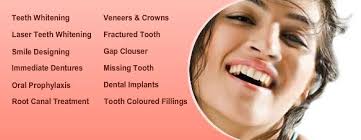

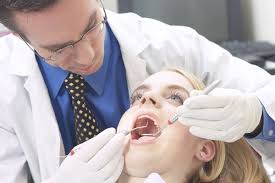
State of the art, professionally managed SUNRISE DENTAL CLINIC PATAUDI, located in the prime areas of Mumbai (Bombay) and Delhi, were established with the sole intent of providing ideal and comfortable dental care for all its clients.
Whether you are based in India or any other part of the world you can be assured of receiving the finest in dental care at Dentzz.
With its highly skilled and reputed panel of specialist dental surgeons spanning across all fields of dentistry, an array of dental procedures, right from one sitting root canals to advanced smile makeovers, dental implants and full mouth rehabilitations are all performed under one roof.


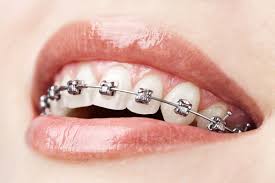


Dental anatomy is a field of anatomy dedicated to the study of human tooth structures. The development, appearance, and classification of teeth fall within its purview. (The function of teeth as they contact one another falls elsewhere, under dental occlusion.) Tooth formation begins before birth, and teeth's eventual morphology is dictated during this time. Dental anatomy is also a taxonomical science: it is concerned with the naming of teeth and the structures of which they are made, this information serving a practical purpose in dental treatment.
Usually, there are 20 primary ("baby") teeth and 28 to 32 permanent teeth, the last four being third molars or "wisdom teeth", each of which may or may not grow in. Among primary teeth, 10 usually are found in the maxilla (upper jaw) and the other 10 in the mandible (lower jaw). Among permanent teeth, 16 are found in the maxilla and the other 16 in the mandible. Most of the teeth have distinguishing features.
Contents
[hide]Whether you are based in India or any other part of the world you can be assured of receiving the finest in dental care at Dentzz.
With its highly skilled and reputed panel of specialist dental surgeons spanning across all fields of dentistry, an array of dental procedures, right from one sitting root canals to advanced smile makeovers, dental implants and full mouth rehabilitations are all performed under one roof.
Tooth development is the complex process by which teeth form fromembryonic cells, grow, and erupt into the mouth. Although many diversespecies have teeth, non-human tooth development is largely the same as in humans. For human teeth to have a healthy oral environment,enamel, dentin, cementum, and the periodontium must all develop during appropriate stages of fetal development. Primary (baby) teethstart to form between the sixth and eighth weeks in utero, andpermanent teeth begin to form in the twentieth week in utero.[1] If teeth do not start to develop at or near these times, they will not develop at all.
A significant amount of research has focused on determining the processes that initiate tooth development. It is widely accepted that there is a factor within the tissues of the firstbranchial arch that is necessary for the development of teeth.[2] The tooth bud (sometimes called the tooth germ) is an aggregation of cells that eventually forms a tooth and is organized into three parts: theenamel organ, the dental papilla and the dental follicle.[3]
The enamel organ is composed of the outer enamel epithelium, inner enamel epithelium,stellate reticulum and stratum intermedium.[3]These cells give rise to ameloblasts, which produce enamel and the reduced enamel epithelium. The growth of cervical loop cells into the deeper tissues forms Hertwig's Epithelial Root Sheath, which determines the root shape of the tooth. The dental papilla contains cells that develop into odontoblasts, which are dentin-forming cells.[3] Additionally, the junction between the dental papilla and inner enamel epithelium determines the crown shape of a tooth.[2] The dental follicle gives rise to three important entities: cementoblasts, osteoblasts, and fibroblasts. Cementoblasts form the cementum of a tooth. Osteoblasts give rise to the alveolar bone around the roots of teeth. Fibroblasts develop the periodontal ligaments which connect teeth to the alveolar bone through cementum.[4]
Tooth development is commonly divided into the following stages: the bud stage, the cap, the bell, and finally maturation. The staging of tooth development is an attempt to categorize changes that take place along a continuum; frequently it is difficult to decide what stage should be assigned to a particular developing tooth.[5] This determination is further complicated by the varying appearance of different histologic sections of the same developing tooth, which can appear to be different stages.
Identification[edit]
Nomenclature[edit]
Teeth are named by their set, arch, class, type, and side. Teeth can belong to one of two sets of teeth: primary ("baby") teeth or permanent teeth. Often, "deciduous" may be used in place of "primary", and "adult" may be used for "permanent". "Succedaneous" refers to those teeth of the permanent dentition that replace primary teeth (incisors, canines, and premolars of the permanent dentition). Succedaneous would refer to these teeth as a group. Further, the name depends upon which arch the tooth is found in. The term, "maxillary", is given to teeth in the upper jaw and "mandibular" to those in the lower jaw. There are four classes of teeth: incisors, canines, premolars, and molars. Premolars are found only in permanent teeth; there are no premolars in deciduous teeth. Within each class, teeth may be classified into different traits. Incisors are divided further into central and lateral incisors. Among premolars and molars, there are 1st and 2nd premolars, and 1st, 2nd, and 3rd molars. The side of the mouth in which a tooth is found may also be included in the name. For example, a specific name for a tooth may be "primary maxillary left lateral incisor."
Numbering systems[edit]
Main article: Dental notation
There are several different dental notation systems for associating information to a specific tooth. The three most commons systems are the FDI World Dental Federation notation, Universal numbering system (dental), and Palmer notation method. The FDI system is used worldwide, and the universal is used widely in the USA.
Although the Palmer notation was supposedly superseded by the FDI World Dental Federation notation, it overwhelmingly continues to be the preferred method used by dental students and practitioners in the United Kingdom.[6] It was originally termed the "Zsigmondy system" after the Austrian dentist Adolf Zsigmondy who developed the idea in 1861, using a Zsigmondy cross to record quadrants of tooth positions.[7] The Palmer notation consists of a symbol (┘└ ┐┌) designating in which quadrant the tooth is found and a number indicating the position from the midline. Permanent teeth are numbered 1 to 8, and primary teeth are indicated by a letter A to E.
The universal numbering system uses a unique letter or number for each tooth. The uppercase letters A through T are used for primary teeth and the numbers 1 - 32 are used for permanent teeth. The tooth designated "1" is the right maxillary third molar and the count continues along the upper teeth to the left side. Then the count begins at the left mandibular third molar, designated number 17, and continues along the bottom teeth to the right side.
The FDI system uses a two-digit numbering system in which the first number represents a tooth's quadrant and the second number represents the number of the tooth from the midline of the face. For permanent teeth, the upper right teeth begin with the number, "1". The upper left teeth begin with the number, "2". The lower left teeth begin with the number, "3". The lower right teeth begin with the number, "4". For primary teeth, the sequence of numbers goes 5, 6, 7, and 8 for the teeth in the upper right, upper left, lower left, and lower right respectively.
As a result, any given tooth has three different ways to identify it, depending on which notation system is used. The permanent right maxillary central incisor is identified by the number "8" in the universal system. In the FDI system, the same tooth is identified by the number "11". The palmer system uses the number and symbol, 1┘, to identify the tooth. Further confusion may result if a number is given on a tooth without assuming (or specifying) a common notation method. Since the number, "12", may signify the permanent left maxillary first premolar in the universal system or the permanent right maxillary lateral incisor in the FDI system, the notation being used must be clear to prevent confusion.
Victor Haderup of Denmark in 1891 devised a variant of eight tooth quadrant system in which plus(+) and minus(-) were used to differentiate between upper and lower quadrants, and between right and left quadrants (e.g., +1=upper right central incisor; 1-=lower left central incisor). Primary teeth were numbered as upper right (05+ to 01+), lower left (-01 to -05). This system is still taught in Denmark.[8][better source needed]
Anatomic landmarks[edit]
Crown and root[edit]

The term "crown" of a tooth can be used in two ways. The term "anatomic crown" of a tooth refers to the area above the cementoenamel junction (CEJ) or "neck" of the tooth.[9] It is completely covered in enamel. The term "clinical crown" often is convenient in referring to any part of the tooth visible in the mouth, but as a rule the unqualified term "crown" refers to the anatomic crown. The bulk of the crown is composed of dentin, with the pulp chamber within. The crown is enclosed within bone before the tooth erupts, but after eruption the crown is almost always visible in an anatomically normal and clinically healthy mouth.
The anatomic root is found below the cementoenamel junction and is covered with cementum, whereas the clinical root is any part of a tooth not visible in the mouth. Similarly, the anatomic root is assumed in most circumstances. Dentin composes most of the root, which normally has pulp canals. The roots of teeth may be single in number (single-rooted teeth) or multiple. Canines and most premolars, except for maxillary first premolars, usually have one root. Maxillary first premolars and mandibular molars usually have two roots. Maxillary molars usually have three roots. The tooth is supported in bone by an attachment apparatus, known as the periodontium, which interacts with the root.
Surfaces[edit]
Surfaces that are nearest the cheeks or lips are referred to as facial, and those nearest the tongue are known as lingual. Facial surfaces can be subdivided into buccal (when found on posterior teeth nearest the cheeks) and labial (when found on anterior teeth nearest the lips). Lingual surfaces can also be described as palatal when found on maxillary teeth beside the hard palate.
Surfaces that aid in chewing are known as occlusal on posterior teeth and incisal on anterior teeth. Surfaces nearest the junction of the crown and root are referred to as cervical, and those closest to the apex of the root are referred to as apical. The words mesial and distal are also used as descriptions. "Mesial" signifies a surface closer to the median line of the face, which is located on a vertical axis between the eyes, down the nose, and between the contact of the central incisors. Surfaces further away from the median line are described as distal.
Cusp[edit]
A cusp is an elevation on an occlusal surface of posterior teeth and canines. It contributes to a significant portion of the tooth's surface. Canines have one cusp. Maxillary premolars and the mandibular first premolars usually have two cusps. Mandibular second premolars frequently have three cusps--- one buccal and two lingual. Maxillary molars have two buccal cusps and two lingual cusps. A fifth cusp that may form on the maxillary first molar is known as the cusp of Carabelli. Mandibular molars may have five or four cusps.
Cingulum[edit]
A cingulum is a convexity mesiodistally resembling a girdle,encircling the lingual surface at the cervical third, found on the lingual surface of anterior teeth. It is frequently identifiable as an inverted V-shaped ridge,[10] and its appearance is comparable to a girdle.[11] All anterior teeth are formed from four centers of development, referred to as lobes. Three are located on the facial side of the tooth, and one on the lingual side. The cingulum forms from this lingual lobe of development.[12] The majority of a lingual surface's cervical third is made up of the cingulum.[13] On lower incisors, a cingulum usually is poorly developed or absent. Maxillary canines have a large, well-developed cingulum,[13] whereas the cingulum of mandibular canines is smoother and rounded.[14]
Ridges[edit]
Ridges are any linear, flat elevations on teeth,[15] and they are named according to their location. The buccal ridge runs cervico-occlusally in approximately the center of the buccal surface of premolars. The labial ridge is one that runs cervico-incisally in approximately the center of the labial surface of canines. The lingual ridge extends from the cingulum to the cusp tip on the lingual surface of most canines. The cervical ridge runs mesiodistally on the cervical third of the buccal surface of the crown. These are found on all primary teeth but only on the permanent molars.
Cusp ridges are ridges that radiate from cusp tips. There are two marginal ridges, mesial and distal, present on all teeth. On anterior teeth, they are located on the mesial and distal borders of the lingual surface; on posterior teeth, they are located on the mesial and distal borders of the occlusal surface. Triangular ridges are those that project from the cusp tips of premolar and molars to the central groove. Transverse ridges are formed by the union of two triangular ridges on posterior teeth. The joining of buccal and lingual triangular ridges is usually named as an example. The oblique ridge is found on the occlusal surfaces of maxillary molars. It is formed by the union of the distal cusp ridge of the mesiolingual cusp and the triangular ridge of the distobuccal cusp. The oblique ridges usually forms the distal boundary of the central fossa.
Developmental groove[edit]
The teeth demonstrating the least number of developmental grooves are the mandibular central and lateral incisors.[16]However, the canines show the most prominent developmental grooves, because they have robust anchorage to the bone.
Embrasures[edit]
Embrasures are triangularly shaped spaces located between the proximal surfaces of adjacent teeth. The borders of embrasures are formed by the interdental papilla of the gingiva, the adjacent teeth, and the contact point where the two teeth meet. There are four embrasures for every contact area: facial (also called labial or buccal), lingual (or palatal), occlusal or incisal, and cervical or interproximal space. The cervical embrasure usually is filled by the interdental papilla from the gingiva; in the absence of adequate gingival tissue a black angle, or Angularis Nigra is visible.
Embrasures have three functions. They form spillways between teeth to direct food away from the gingiva. Also, they provide a mechanism for teeth to be more self cleansing. Lastly, they protect the gingiva from undue frictional trauma but also providing the proper degree of stimulation to the tissues.
Mammelons[edit]
Mammelons are usually found as three small bumps on the incisal edges of anterior teeth. They are the remnants of three lobes of formation of these teeth, the fourth lobe represented by the cingulum. Since this surface of the tooth is the first to wear away from attrition, mammelons may not be visible on teeth of older people. Instead, the best chance to see this characteristic is soon after eruption of the tooth into the mouth. Note, the presence of mammelons in adults is an indication of malocclusion.
Distinguishing characteristics of teeth[edit]
Incisor[edit]
8 incisors are anterior teeth, 4 in the upper arch and 4 in the lower. Their function is for shearing or cutting food duringchewing. There are no cusps on the teeth. Instead, the surface area of the tooth used in eating is call
- Hi-Tech Dentistry: Advanced smile makeovers, full mouth dental implants, zirconia and CAD CAM crowns, laser dentistry, invisible braces – we offer our patients the absolute best and latest in dental technology. We have our in house 3D CT scan machine, which ensures flawless accuracy in diagnosis and treatment.
- Global expertise: Each of our specialist dentists has received advanced training across the world such as Germany, USA, UK. Our team is stringently hand picked out of the thousands of applications we receive each year. This ensures that at Dentzz, you will always be in the best of hands.
- Long term warranties: We know our work is unparalleled. Therefore, we have no hesitation in offering genuine warranties of up to 20 years on our work, even money back warranties in certain cases.
- Support: Unlike an individual dentist's practice in which vital support depends upon the dentist's availability, we will always be there for you for years to come. We have multiple specialists across every field. So there will always be a backup should any individual team member not be available after a few years.
- Materials: All materials used in our setup are imported from USA, UK, Germany, Australia. They are the same materials used in any top practice across the world. We do not use sub standard Chinese imports, which unfairly brings down the costs to the patient.
- Sterilization: We follow strict and stringent sterilization protocols. Since we are an internationally certified setup, all protocols are monitored
- ISO 9001:2008 certified: All our protocols, materials and expertise are as per international standards.
- Time management: We understand that it may be difficult to make time for dentistry in a busy schedule. Thus we have developed specialized processes designed to help us perform maximum work in minimum time, with as few appointments as possible.
- An eye for aesthetics: From a simple crown to a complete smile makeover, we ensure that your new teeth look absolutely natural and stunning. With our UK trained cosmetic dentists, we ensure that the principles of design and aesthetics are incorporated in each and every aspect of our work.
- Limited work: We limit the amount of work we take up based on a first come first served basis. This helps us maintain our impeccable quality standards


Dental Implants
Artificial tooth roots
Nothing can take place of a healthy set of natural teeth. But if you have missing teeth and want a solution that is close to your natural teeth as possible, dental implants are the modern day best option for you. Implants have been used for more than a quarter century.
It is an ancient art refined and now its use is quite easy and predictable. Implants are posts or cylinders, which are surgically placed in the upper or lower jaws where they function as a sturdy anchor for replacement teeth. They are made of Titanium, a strong, lightweight metal, and are readily accepted by the human body.
Why are implants used?
Implants are used to replace missing teeth. Why replace missing teeth? Here are some of the reasons:- Missing teeth may create a lasting social, psychological and emotional turbulence. Missing teeth may affect your self-esteem and confidence and may make you feel awkward, anxious and nervous or self-conscious while going out in public.
- Missing teeth may affect your speech and appearance. It may cause your facial muscles to sag and give you that old worn outlook.
- Missing one or more back teeth affects chewing. The biting force on the remaining teeth begins to change to compensate for the lost tooth. Consequently there is extra pressure and discomfort, which may accelerate their decay and demise.
- Teeth surrounding the missing tooth may start to shift and this leads to difficulty in cleaning and chewing. Over time there is plaque and tartar accumulation, which causes gum disease and weaken the support of the remaining teeth.
- Missing teeth may lead to collapse of the jaws. This results in gaps and spaces between the remaining teeth and undue prominence of the chin, making chewing difficult and the individual looking older. The ability to chew fibrous and nutritious food also decreases drastically because of missing teeth.
Stages of implant treatment
The dental implant treatment has four phases:
- Drawing a treatment plan: The dentist will take a full mouth (OPG) Xray and if required a 3D Dental CT (CBCT) to plan implant placement procedure. The dentist will assess the amount of bone, quality, and number of implants and draw a treatment plan.
- Placement of Implant: The dentist surgically places the implant into the jawbone. Antibiotics and painkillers will be prescribed and a diet of soft and cold foods will be recommended for a few days. Some patients might need to wait until the implant is completely integrated, up to several months, before the permanent teeth can be fitted over the implant. Other patients can have the implants and teeth placed all in one visit.
- Fitting the crown or bridge: The crown or bridge will be fitted over the rock solid titanium screw, which has by now found firm support in the jaw bone. The prosthesis usually takes some time to make. In the mean time, your dentist may give you a temporary crown, bridge or denture. His can help you eat speak normally until the permanent are ready. A dental implant can also be fixed just after tooth extraction, so that you don't have to be without a tooth even for a day.
- Caring for your teeth: Maintaining a good oral hygiene is the key to the long term success of a dental implant. Brush atleast twice a day and if required use an inter dental brush to clean between crowns and bridges regularly. And you must see your dentist every six months for regular examination and if required professional teeth cleaning
